
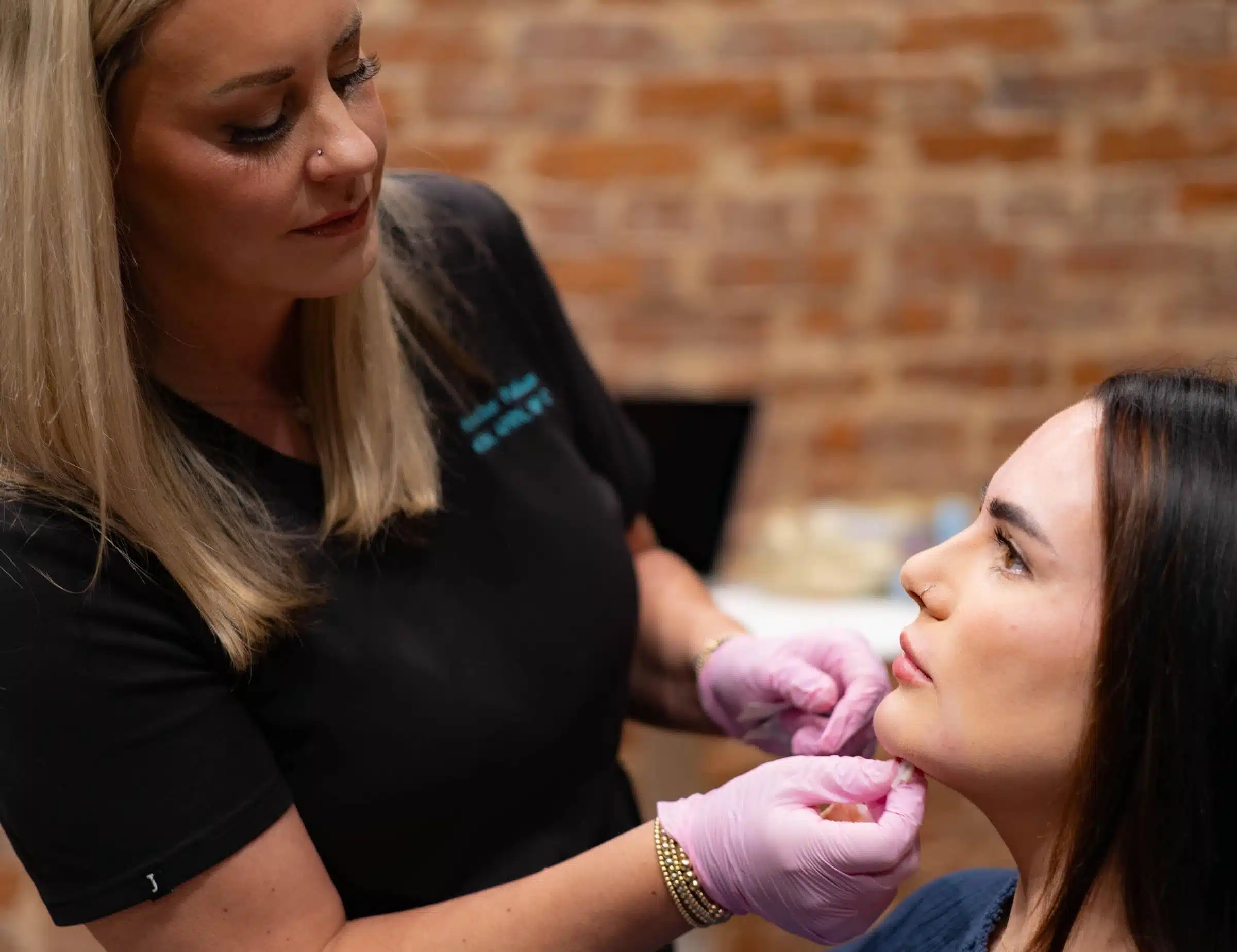
Lip enhancement with dermal fillers is designed to refine shape, restore youthful volume, and improve facial harmony with subtle, natural-looking results. When performed correctly, the filler remains precisely within the lip structure, enhancing definition without altering natural anatomy. However, in some cases, patients may experience lip filler migration, a condition where product gradually moves beyond the intended treatment area.
At Camel City Injector in Winston-Salem, treatments are performed with a strong emphasis on anatomical precision, conservative dosing, and long-term aesthetic balance to minimize such risks. This guide breaks down how to recognize migration early, what causes it, and the most reliable correction methods available today.
What Lip Filler Migration Actually Means
Lip filler migration refers to the unintended movement of hyaluronic acid filler outside the natural lip borders, typically into the skin above the upper lip or surrounding perioral area. Instead of staying confined within the vermilion body (the pink portion of the lips), the filler disperses into adjacent tissues. This can subtly or significantly alter lip shape, reducing definition and creating an overfilled or blurred appearance. Migration is usually gradual and may not become noticeable until weeks or even months after treatment, especially in patients with repeated filler sessions.
Visual Clues That Indicate Lip Filler Has Shifted
Lip filler migration presents in several recognizable ways. These changes often develop progressively:
1. Noticeable Volume Above the Upper Lip Border
A soft, rounded fullness appears just above the lip line, creating a “raised ledge” effect that sits outside the natural lip anatomy.
2. Reduced Definition Along the Lip Edge
The once-defined border of the lips becomes softened or indistinct, making the lips appear less sculpted and more diffused.
3. Excess Fullness in the Perioral Region
Instead of being contained within the lips, volume extends into the surrounding skin, particularly the area directly above the upper lip.
4. Forward Projection of the Lips
In more advanced cases, lips may appear to protrude outward excessively, sometimes described as a “duck-like” or overfilled profile.
5. Uneven Texture or Small Firm Areas
Migrated filler may feel slightly lumpy or firm, especially when it sits outside the intended tissue plane.
6. Disrupted Lip Symmetry and Balance
The natural proportion between upper and lower lips may become uneven, with one area appearing heavier or disproportionately full.
Underlying Factors That Contribute to Migration
Lip filler migration is rarely caused by a single factor. It typically results from a combination of technique, product choice, and treatment history.
- Excessive Filler Volume: Overfilling stretches delicate lip tissue, increasing internal pressure and encouraging filler displacement beyond the lip border.
- Suboptimal Injection Depth or Placement: If filler is placed too superficially or too close to the lip edge, it may lack structural support and gradually spread outward.
- Repeated Treatments Without Structural Assessment: Multiple filler sessions without evaluating existing product distribution can lead to cumulative distortion over time.
- Product Behavior Within Soft Tissue: Different filler formulations vary in viscosity and spreadability. If not matched correctly to the treatment goal, migration risk may increase.
- External Pressure or Post-Treatment Stress: Early manipulation, pressure during sleep, or frequent lip movement immediately after treatment can contribute in some cases.

Clinical Evaluation and Diagnostic Approach
At Camel City Injector, diagnosis is based on a detailed aesthetic and anatomical evaluation rather than visual observation alone. This includes:
- Assessment of lip proportions and symmetry
- Evaluation of border definition integrity
- Physical palpation to detect displaced filler
- Review of previous filler history and treatment volume
This structured approach helps differentiate true migration from swelling, product settling, or natural tissue response.
Medically Proven Methods for Correcting Migration
Lip filler migration is highly treatable with modern aesthetic techniques. The best approach depends on severity and distribution.
Targeted Hyaluronidase Treatment
The most effective correction method is the use of hyaluronidase, an enzyme that safely dissolves hyaluronic acid filler. This treatment:
- Works within 24 to 48 hours
- Can selectively target migrated areas
- Allows precise reshaping while preserving well-placed filler when appropriate
It is widely considered the gold standard for correcting filler-related complications.
Full Dissolution for Complete Reset
In more advanced or long-standing cases, complete dissolution may be recommended to fully restore natural lip anatomy. This approach removes all filler from the lips, allowing the tissue to reset before any future enhancement is performed.
Recovery and Tissue Stabilization Phase
Following dissolution, a healing period of approximately 4 to 8 weeks is typically advised. This allows inflammation to resolve and natural lip structure to stabilize. Proper healing ensures safer and more predictable outcomes in any future treatments.
Controlled Rebuilding After Correction
Once the lips have fully healed, enhancement can be carefully reintroduced using a more refined approach:
- Lower, more conservative filler volumes
- Deeper anatomical placement techniques
- Focus on structure and balance rather than excessive volume
- Gradual layering over time instead of single-session overcorrection
This strategy significantly reduces the likelihood of recurrence.
Can Mild Cases Be Managed Without Dissolving?
In very limited cases where migration is minimal, conservative monitoring or minor adjustments may be considered. However, visible or structurally noticeable migration is most effectively corrected using hyaluronidase for predictable and controlled outcomes.
Evidence-Based Strategies to Prevent Future Migration
Prevention is a key component of long-term lip filler success.
Prioritizing Conservative Enhancement
Smaller, staged treatments reduce stress on delicate lip tissues.
Anatomically Accurate Injection Technique
Proper depth and placement ensure filler remains stable within the intended structure.
Avoiding Overcorrection Cycles
Spacing treatments appropriately prevents accumulation and distortion over time.
Choosing an Experienced Injector
Skill, training, and anatomical expertise are critical in minimizing complications.
Following Post-Treatment Guidelines
Avoiding unnecessary pressure and manipulation immediately after treatment helps maintain filler position.
Camel City Injector’s Philosophy on Lip Aesthetics in Winston-Salem
At Camel City Injector, lip enhancement is approached with precision-driven restraint rather than excess. The goal is to achieve refined, balanced results that enhance natural beauty without overcorrection. Our core principles include:
- Facial harmony over exaggerated volume
- Anatomically guided injection planning
- Conservative, customized treatment strategies
- Safe and structured correction protocols
- Long-term aesthetic preservation rather than short-term enhancement
Every treatment is designed to respect individual facial structure and maintain natural expression.
When Professional Evaluation Becomes Necessary
A clinical assessment is recommended if any of the following are observed:
- A visible ridge or fullness above the upper lip
- Blurred or softened lip borders
- Uneven or disproportionate lip shape
- Persistent puffiness outside the lip line
- A noticeably overfilled or distorted appearance
Early intervention typically results in simpler and more effective correction.
Final Perspective
Lip filler migration, while concerning in appearance, is a manageable and reversible condition when addressed appropriately. With modern corrective tools such as hyaluronidase and anatomically precise re-treatment strategies, natural lip structure can be safely restored. At Camel City Injector in Winston-Salem, the focus remains on delivering refined, natural-looking enhancements supported by medical expertise, anatomical precision, and a commitment to long-term aesthetic integrity.