
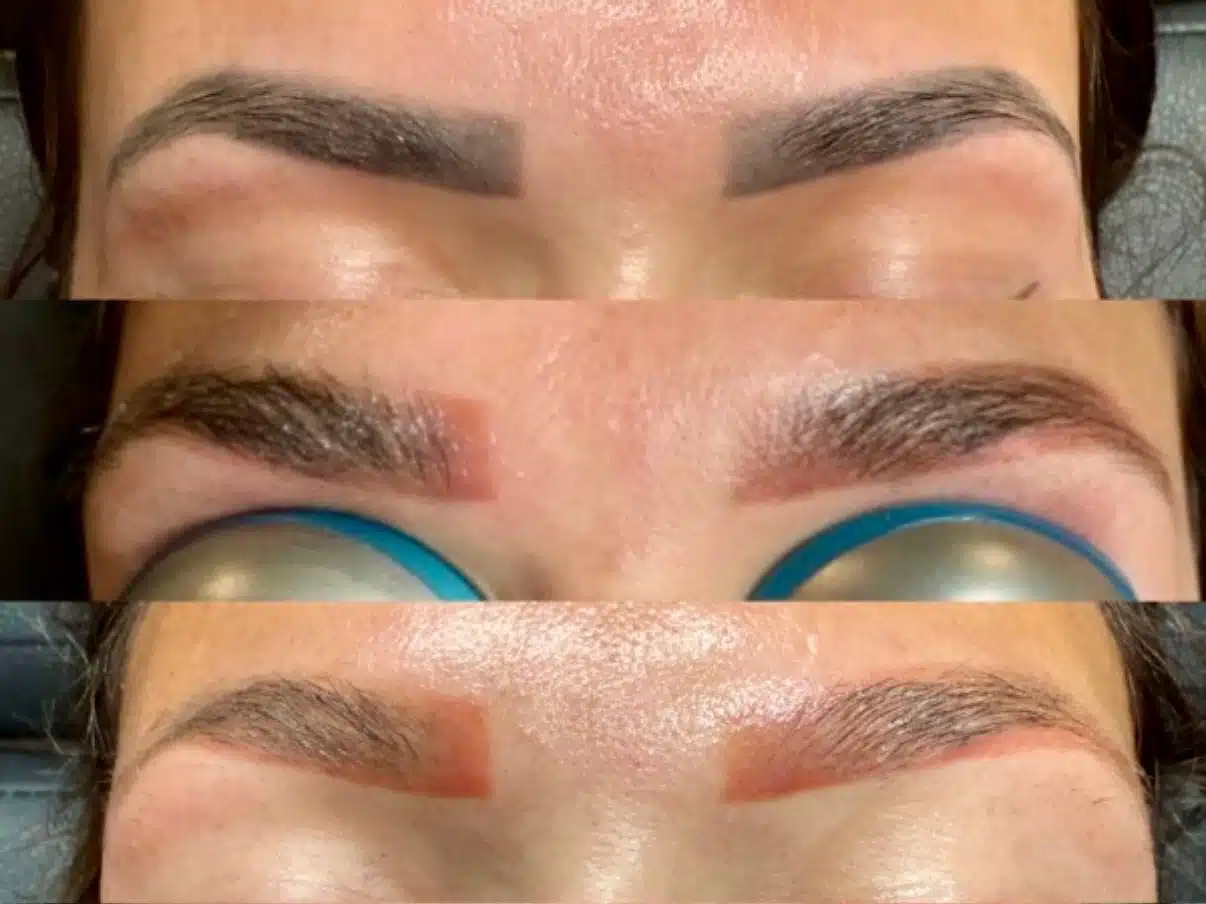
Unwanted micro blading is more than just a cosmetic inconvenience; it can affect confidence, facial balance, and long-term aesthetic satisfaction. Whether the pigment has turned ashy, faded unevenly, or simply no longer suits your face, modern corrective treatments now offer safe and effective solutions. The two leading methods used worldwide are laser removal and saline removal. While both aim to reduce or eliminate unwanted pigment, they function in fundamentally different ways and are suited for different correction scenarios.
Understanding these differences is essential before committing to treatment, especially if you are seeking precise, natural-looking results from an experienced provider such as Camel City Injector.
Why Microblading Sometimes Needs Removal or Correction
Microblading is designed to enhance eyebrows with semi-permanent pigment strokes that mimic natural hair. However, several factors can lead to unsatisfactory results over time.
Common Reasons Clients Seek Removal
- Pigment changing color (grey, blue, red, or orange tones)
- Uneven fading or patchy appearance
- Overly thick or unnatural brow shape
- Poor initial application technique
- Outdated brow trends that no longer match facial features
- Skin type reacting unpredictably to pigment
Unlike makeup, microblading sits beneath the skin’s surface, meaning correction requires professional intervention rather than simple fading or exfoliation.
Understanding Modern Brow Removal Techniques
Both laser and saline removal target pigment embedded in the skin, but they do so through completely different biological and physical processes.
- Laser removal uses controlled light energy to fragment pigment particles
- Saline removal uses a healing-based extraction process to lift pigment out of the skin
Each approach offers unique advantages depending on pigment depth, color, and skin sensitivity.
Laser Brow Removal: Advanced Technology for Deep Pigment Breakdown
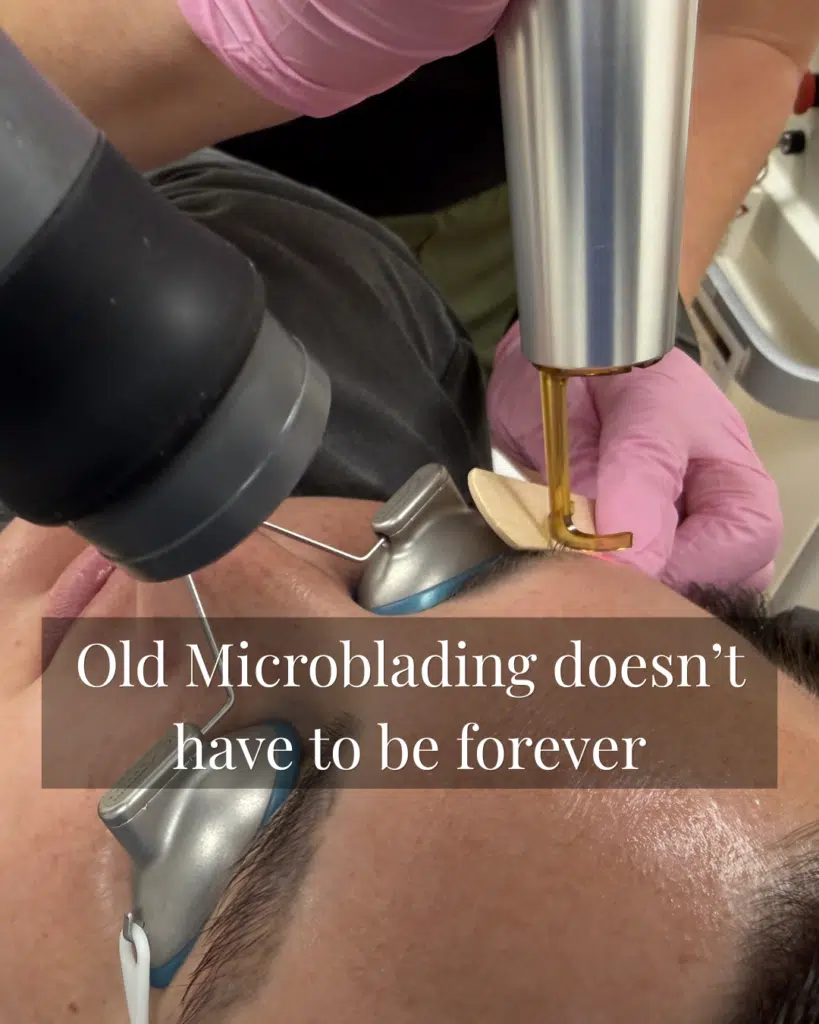
Laser removal is widely considered the most efficient method for breaking down cosmetic tattoo pigments, especially darker tones. It works by emitting concentrated pulses of light that penetrate the skin and target pigment particles. These particles absorb the energy, break into smaller fragments, and are gradually cleared by the body’s immune system.
How the Laser Process Works Step-by-Step
- Laser energy is directed at the pigmented area
- Pigment absorbs the light based on color density
- Ink particles shatter into microscopic fragments
- The lymphatic system naturally eliminates the fragments over time
This process is repeated across multiple sessions until the desired level of fading is achieved.
Advantages of Laser Removal
Laser treatment offers several clinical benefits:
- Highly effective for dark and saturated pigments
- Faster visible fading compared to most other methods
- Minimal disruption to the skin’s surface
- Precision targeting of deeper pigment layers
- Suitable for older, more established microblading
For many clients, laser provides the fastest path toward a clean slate for future brow redesign.
Limitations of Laser Treatment
Despite its effectiveness, laser removal has certain limitations:
- Less effective on light or warm-toned pigments
- Some ink colors may temporarily darken before fading
- Requires multiple sessions for full correction
- Results vary depending on ink composition and depth
Laser is powerful, but not universally perfect for every pigment type.
Saline Brow Removal: A Controlled Healing-Based Alternative
Saline removal offers a non-laser approach that relies on the body’s natural healing process. Instead of breaking pigment with light energy, a specialized saline solution is introduced into the skin using a tattoo machine. This solution draws pigment upward through osmosis, allowing it to exit the skin during the healing cycle.
How the Saline Process Works
- A saline solution is implanted into the treated area
- The skin responds by forming a controlled scab
- Pigment binds to the scab during healing
- The scab naturally falls off, lifting pigment with it
Each session gradually reduces pigment intensity over time.
Advantages of Saline Removal
Saline removal is especially valued in corrective cosmetic work because:
- Works on all pigment colors, including light tones
- No laser energy involved
- Ideal for sensitive skin types
- Useful for recent or shallow microblading
- Allows for gradual, controlled fading
It is often the preferred method when precision correction is needed rather than aggressive removal.
Limitations of Saline Removal
However, saline removal also has practical drawbacks:
- Slower results compared to laser for dark pigment
- Requires multiple treatment sessions
- Visible scabbing during healing phase
- Less effective for deeply implanted ink
This method demands patience and strict aftercare for optimal outcomes.
Laser vs Saline: A Detailed Technical Comparison
To make an informed decision, it’s important to compare both methods side by side.
1. Method of Action
- Laser: Uses photothermal energy to fragment pigment
- Saline: Uses osmotic pressure and healing response to extract pigment
2. Best Pigment Types
- Laser: Dark brown, black, deep saturated ink
- Saline: Light, warm, or mixed pigment tones
3. Treatment Speed
- Laser: Faster visible fading in fewer sessions
- Saline: Gradual fading over extended healing cycles
4. Skin Interaction
- Laser: Targets pigment below the skin surface
- Saline: Works through controlled epidermal healing
5. Healing Experience
- Laser: Minimal downtime, mild redness
- Saline: Scabbing and peeling are expected
6. Overall Outcome Control
- Laser: More predictable for dark pigments
- Saline: More versatile for color correction cases
Choosing the Right Removal Method for Your Brows
Selecting between laser and saline is not a one-size-fits-all decision. It depends on a combination of pigment characteristics and individual skin response.
Laser Removal May Be Ideal If You Have:
- Old, dark, or heavily saturated microblading
- Desire for faster correction results
- Minimal skin sensitivity
- Plans for complete brow removal or reset
Saline Removal May Be Ideal If You Have:
- Light, warm, or mixed pigment tones
- Recent microblading work
- Sensitive or reactive skin
- Intent to gradually reshape rather than fully remove
In advanced cases, practitioners may combine both methods to achieve optimal fading and correction balance.
What to Expect During the Removal Journey
Microblading removal is not an instant procedure. It is a structured process that unfolds over several weeks or months.
Treatment Timeline Overview
- Initial consultation and skin assessment
- First treatment session (laser or saline)
- Healing period (2–6 weeks depending on method)
- Follow-up sessions for progressive fading (Typically 3 sessions)
- Final refinement or brow redesign
Consistency and patience are essential for achieving clean, even results.
Healing and Aftercare: Why It Matters
Proper aftercare plays a major role in the success of both laser and saline treatments.
After Laser Sessions
- Mild redness or swelling may occur
- Pigment fades gradually over time
- Avoid sun exposure for best results
After Saline Sessions
- Scabbing is part of the healing process
- Do not pick or peel scabs
- Keep the area clean and dry
Ignoring aftercare instructions can affect pigment removal efficiency and skin quality.
Risks, Misconceptions, and Realistic Expectations
Many clients enter removal treatments with unrealistic expectations. Understanding the limitations is key.
Common Misconceptions
- “One session is enough for full removal” → Incorrect
- “All pigment will disappear completely” → Not always possible
- “Removal is painless” → Mild discomfort is normal
Possible Risks (Rare with Professionals)
- Temporary skin sensitivity
- Uneven fading if aftercare is ignored
- Slight textural changes in overtreated areas
Choosing a qualified provider significantly reduces these risks.
Professional Expertise Makes the Difference
Successful microblading removal is not just about choosing the right method it’s about correct diagnosis and execution. Experienced practitioners evaluate:
- Depth of pigment placement
- Type and age of ink
- Skin type and healing history
- Desired final brow outcome
Clinics like Camel City Injector specialize in customized correction plans designed to ensure safe, predictable, and aesthetically balanced results.
Final Verdict: Which Method Is Better?
There is no absolute winner between Laser vs Saline Microblading Removal. Each technique serves a distinct purpose in cosmetic correction.
- Laser removal is best for speed, depth, and dark pigment breakdown
- Saline removal is best for versatility, sensitivity, and color correction
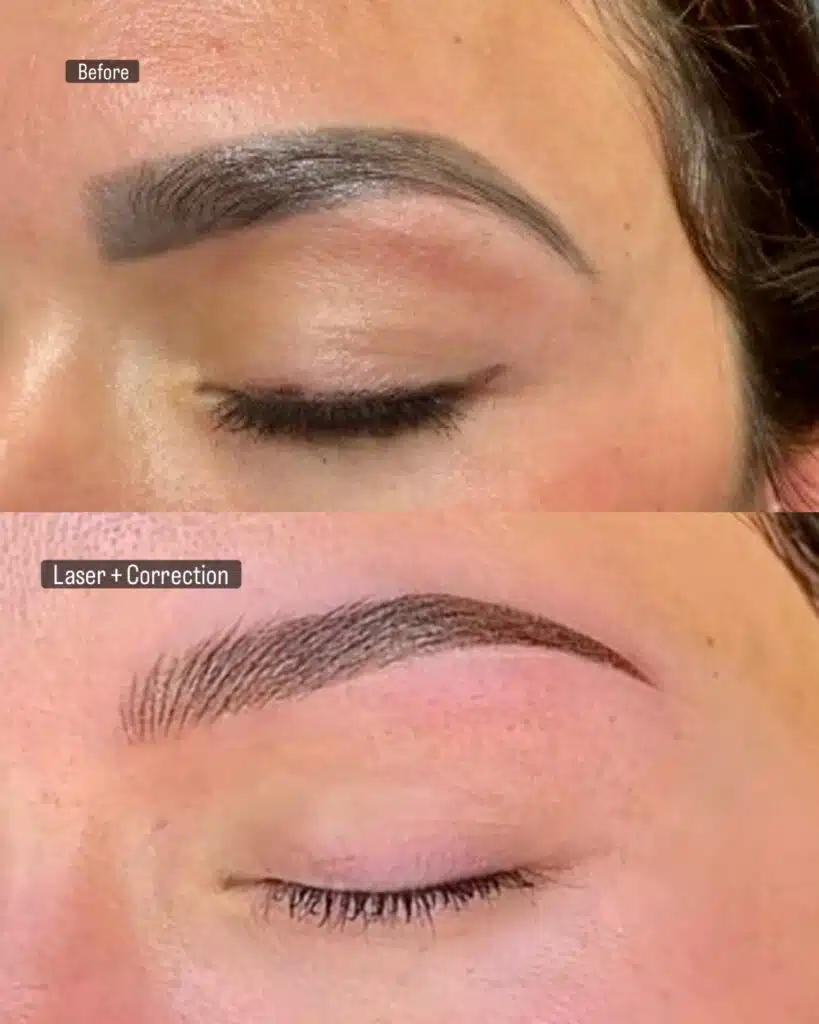
In many modern aesthetic cases, the best results come from a strategic combination of both methods, guided by expert assessment.
Final Thoughts
Microblading removal is a precise, medically influenced cosmetic process that requires patience, planning, and professional care. Whether you choose laser or saline, the goal is not just pigment reduction but restoring facial harmony and preparing the brows for a refined, natural future design. With expert guidance and a tailored approach, even poorly executed microblading can be successfully corrected, giving you a clean foundation for brows that truly complement your face.